I was loosely inspired by an item in Pokemon called the “Old Gateau”. In the English, this item is a reference to the location is was found in, called the Old Chateau. In Japanese, the item and the location are named “Mori no Yokan”, which means either the “Forest Yokan(Japanese red bean jelly)” or “Forest Mansion”. The Old Gateau or Mori no Yokan is found in an haunted, abandoned mansion in the forest in Pokemon Diamond and Pearl, and it has been featured in several other Pokemon games since. Yokan, as I already mentioned, is a Japanese jelly dessert made with red bean paste typically. When made with red bean, which seems to be the case for the version featured in Pokemon, yokan can have this dark purple in color, and a silky texture. Since the item was called a “gateau” in the English version, I envisioned this dessert being a cake. So in light of trying to reference both the Japanese and English inspirations for this item, I decided to make a “gateau” that features yokan throughout the dessert! I also wanted to decorate the cake with green-colored garnishes, just to further accentuate that forest aesthetic. So for this recipe, we have a matcha castella(a spongecake popularized in Taiwanese and Japanese cuisines), a matcha namelaka, yokan, which is being used as both a filling and a glaze for the cake, and matcha tuiles, to resemble ivy from the forest.
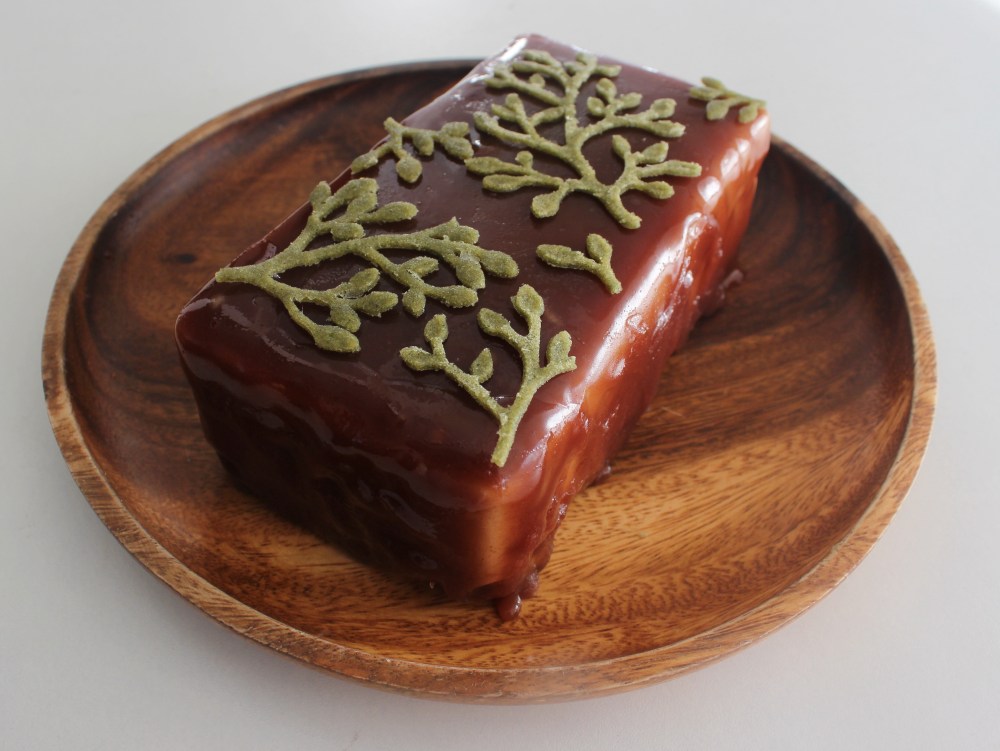
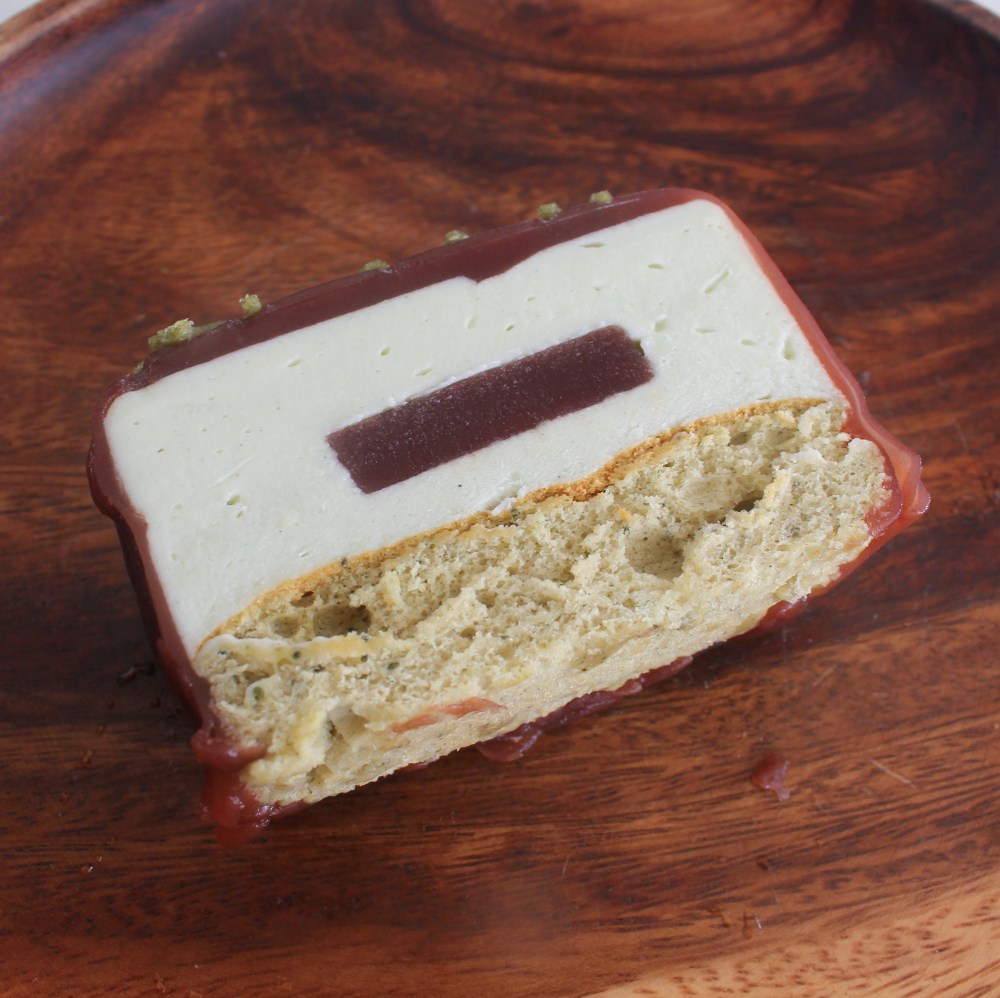
From a technical standpoint, ironically, the matcha-flavored components require a lot of focus, while the red bean/azuki components, which take a more visual presence in this dessert, are relatively easy to execute! The matcha castella requires whipping eggs, sugar, and honey or mizuame(sweet rice syrup) to form both a stick meringue and thick, ribbony egg yolks. The cake itself is then baked in a hot water bath, low and slow, then cut into rectangular pieces for assembly. With the yokan, it is made with red bean paste and agar to form a gelee. Then gelee is then cut into a smaller shape, while the rest of it is then reserved to be re-melted as a glaze for the entire cake. The matcha namelaka requires a decent chunk of setting time since it uses gelatin. But it is all the more worth it, since it has this ultra silky, creamy texture that plays with the grassiness of the matcha well. With the matcha tuiles, I used Pavoni leaf molds to shape them. They were very delicate, but working with them while they are still warm makes for an easier time when it comes to unmolding the tuiles in one piece. I was overall pretty happy with how the cake came out, and was delighted to see the different components as well!
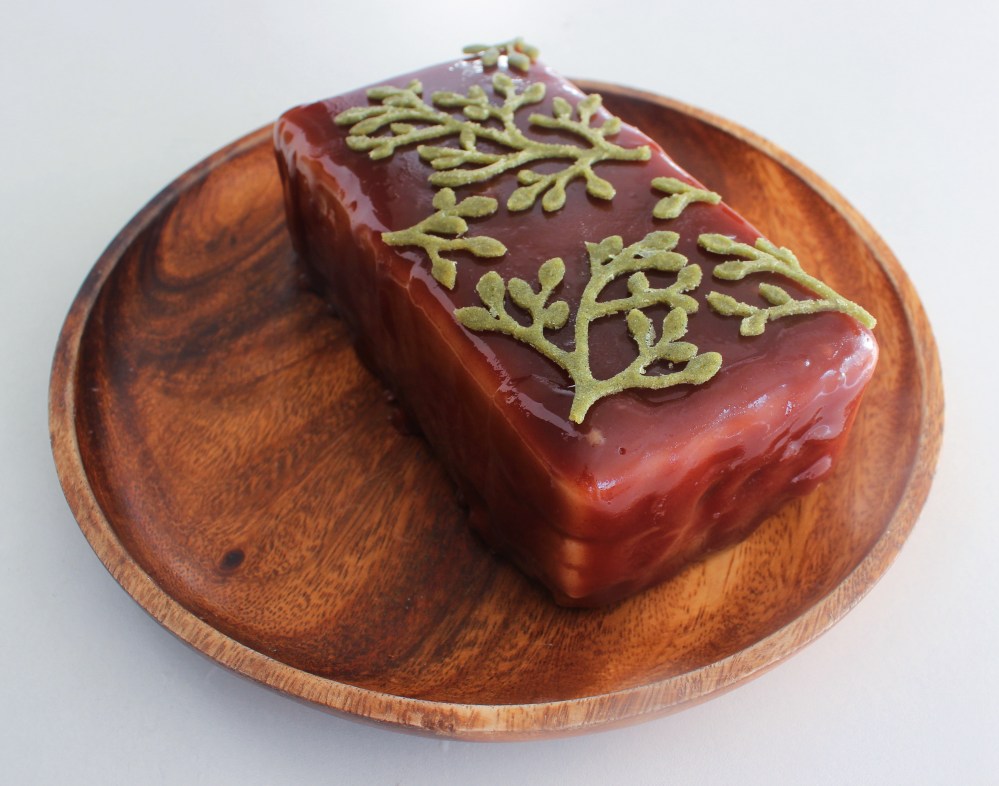
Makes 1 4-inch by 6-inch cake, or 6 servings:
For the matcha castella:
4 eggs, separated
1/4 cup granulated sugar
1oz honey or mizuame
1 tbsp ceremonial matcha powder
A pinch of salt
2/3 cups all-purpose flour
In a bowl, whisk the egg whites with sugar until stiff peaks form. In another bowl over a double boiler, whisk together the egg yolks, honey, matcha, salt until they reach ribbon-stage: the egg yolks should be pale green in color, very thick and fluffy, and you should be able to write the number “8” with them using a whisk.You should not need to whisk the eggs for longer than 5 minutes on medium-low heat to accomplish that.
Sift the flour into the yolk mixture first, then fold into that flour-yolk mixture the whipped egg whites to form your batter. Pour into into a small eigth sheet tray lined with parchment and cooking spray. Bake the cake in a water bath, at 300 degrees F, for about 35 minutes. Allow the cakes to cool fully before removing from the baking sheet.
After the cake is fully cool, cut out a 4 inch by 6 inch rectangle using a similarly sized mold(I used the smallest of one of these to do so).
For the yokan:
6oz red bean paste
3 tbsp agar agar
2oz water
a pinch of salt
Refrigerate the yokan mixture in a shallow rectangular tupperware until firm. Trim the yokan to be a 2 inch wide by 6 inch long rectangle. Reserve any scraps for your glaze.
For the matcha namelaka:
4oz white chocolate
4oz heavy cream, in two parts
1 tsp gelatin powder+1 tbsp cold water
1 tsp matcha powder
a pinch of salt
In a pot, melt down the white chocolate with one part of the heavy cream, the gelatin, the matcha powder, and salt. Allow the white chocolate and gelatin to fully dissolve into the cream, then refrigerate it until it cools down completely. Then mix into the white chocolate the remaining whipped cream to form your namelaka.
For initial assembly:
Pour half of the namelaka into a small 4 inch by 6 inch rectangular cake ring that was lined with cling wrap and cooking spray. Then press in the yokan rectangle. Then add in the remaining namelaka, and the castella, pressing in to guarantee that the namelaka fills out the mold. Freeze the cake until it is fully solid before attempting to unmold, at least 2 hours.
For the azuki glaze:
Reserved yokan
Re-melt the yokan down, measuring it out to be 5 parts yokan to 1 part water. Once the yokan has fully re-dissolved into the liquid, allow the liquid to cool, off heat, until it reaches 90 degrees F. Pour the glaze over the frozen-solid cake to finish.
For the matcha tuiles:
1 tbsp all-purpose flour
1 tsp granulated sugar
1/4 tsp egg white powder
1//2 tsp water
1/4 tsp matcha powder
a pinch of salt
.1oz oil
In a bowl, mix everything together to form your batter. Spread the batter into Pavoni tuile molds and bake at 300 degrees F for 12 minutes. Carefully remove the tuiles from the molds and allow them to cool before decorating the set cake with them.
 Freddy's Harajuku