Whenever I think of persimmons, I remember my earlier childhood – our backyard had white guava, white peach, and fuyu persimmon trees, so depending on the time of year, we had fresh fruit to eat! Persimmon in particular are an interesting fruit, because depending on their ripeness, their flavor and texture can completely change. With an unripe persimmon, they are firm and crunchy, like an apple or pear, and while they can be a little sweet, they have an astringent, dry aftertaste. Despite this, unripe persimmon can be shaved and used as gorgeous garnishes, and they actually don’t taste half bad in a salad eithe. Ripe persimmon basically has the appearance and consistency of apricot jam, while tasting like brown sugar, honey, and jelly had a baby. They are delicious, and I prefer the ripe ones for dessert usage. There’s also dried persimmons, which just taste like a date. There are two popular varieties of persimmon as well, being fuyu, which I was referring to/grew up on, or hachiya – hachiya persimmon are rounder in size, almost acorn-like in shape, and they can only be eaten ripe. Fuyu are flatter, can be eaten unripened, and are what I used in my recipe. Getting your persimmon ripe is a labor of love and patience – I ripened mine by setting and forgetting them in my fridge for like a month. You can also luck out by buying them ripe from the grocery store too – for this recipe, get the ripest ones you can! You can tell they are ripe if they are soft and squishy.
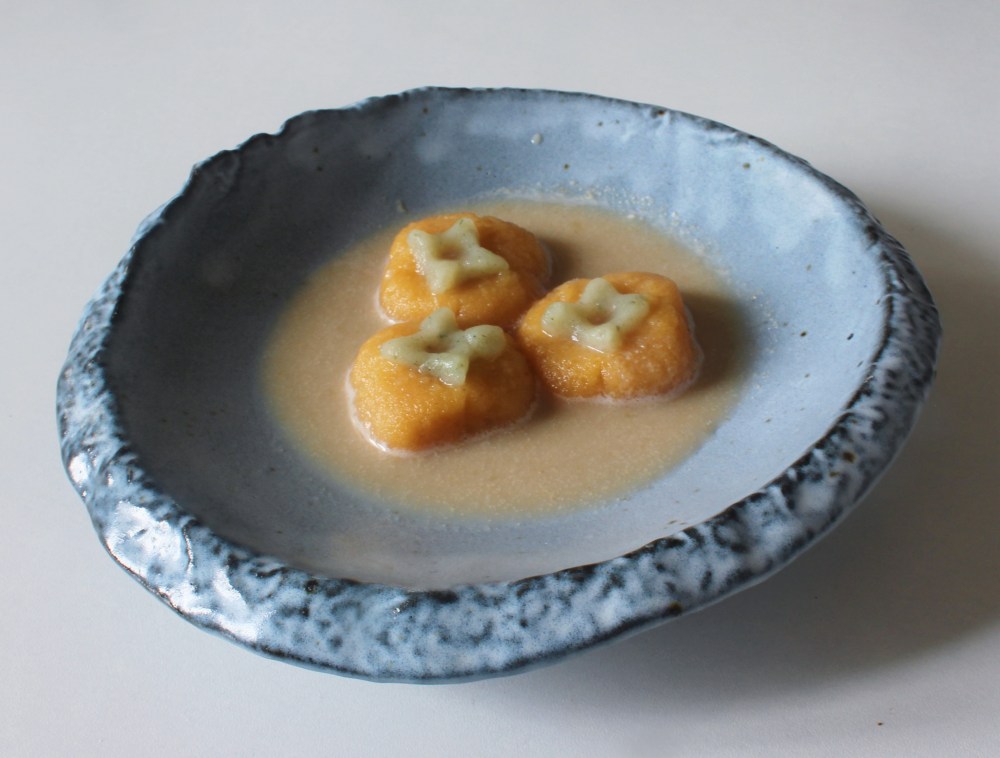
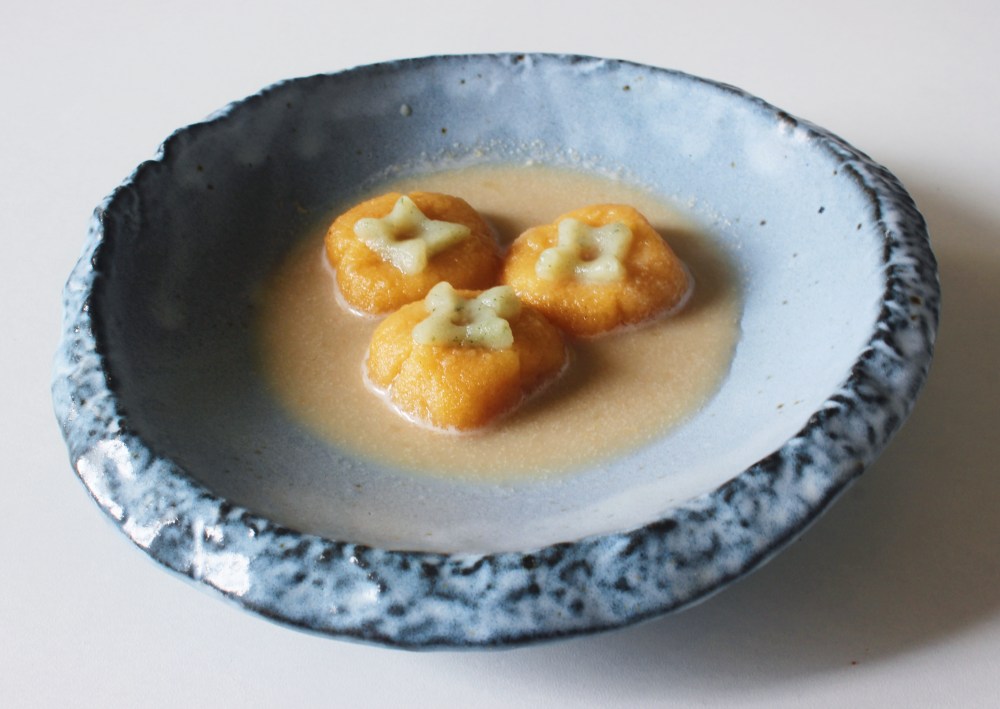
Besides that mini-essay I wrote about persimmons, let’s talk the recipe itself. I made tang yuan(Chinese for “soup rounds”, which are these chewy glutinous rice balls, similar to a poached mochi or a dango, served with a sweet soup. Tang yuan are popularly eaten in China and Taiwan, and are usually stuffed with a sweet black sesame or peanut filling. In my case, I flavored the glutinous rice dough instead of stuffing it, using persimmon puree for the majority of it, and mugwort(a herbaceous green leaf) to flavor the decorative leaf dough on top. The dough itself came together really quickly, because of how few ingredients were needed to actually form them – please make sure you get glutinous rice flour or mochiko when shopping for this recipe. If you try using regular rice flour, this recipe will not work. Trust me, I made that mistake years ago, and only recently used up the rest of the regular rice flour I had mistakenly purchased. I also served these little guys with a sweet sesame-kinako(toasted soy bean powder) soup, reminiscent of Taiwanese mi jiang(toasted peanut and rice soup), just to bring another aspect of my childhood to the forefront. This recipe is essentially two components, being the little persimmon tang yuan, and the creamy, toasty sesame soup, but it is a comforting dessert that reminds me of New Years celebrations, Taiwanese brunch, and my childhood of picking persimmon in the back yard, but all in one! Oh, and somehow this recipe manages to be both vegan and gluten-free if you’re into that!
Makes 6 portions:
For the sesame-kinako soup:
1/2 cup toasted white sesame seeds
2 cups almond or oat milk
1/4 cup kinako powder
a pinch of salt
3 tbsp dark brown sugar
1 tsp cooking sake or mirin
In a blender, puree sesame seeds, milk, kinako, salt, and sugar until combined. In a pot, start by cooking down the cooking sake/mirin by half, before adding in the blended sesame milk, stirring that all together and bringing up to a simmer.
For the persimmon tang yuan:
3oz water
2oz ripe persimmon pulp, peel, leaves, and seeds removed
a pinch of salt
6oz mochiko
In a blender, puree water, persimmon, and salt until smooth. Pour into a bowl and mix with salt and mochiko until combined. Divvy up the dough into 20g balls, and roll until smooth, rounded, and gently flatten. Using a butter knife, form four indents on the sides of the tang yuan.
For the mugwort dough:
.5oz mochiko
.2oz water
.1oz mugwort powder
a pinch of salt
1 tsp sugar
In a bowl, mix everything together until a dough forms. Roll the dough out between two sheets of parchment into a 1/16-inch thickness, and cut out 1/2-inch cross shapes.
Brush the tops of the persimmon tang yuan with water and place the mugwort dough on top.
Poach the tang yuan in a pot of boiling water for 15 minutes, stirring the water on occasion so that they don’t stick to the bottom of the pot and burn.
 Freddy's Harajuku