I am forever grateful to the pandemic in that I was able to come up with several recipes that I would not have had the time to do if I was busy with my regular day to day. While yes, times were tough, uncertain, and difficult, I can look back at those moments in my life fondly, just because I was given a chance to put everything on pause, and focus on doing more recipe development. One of the pandemic recipe babies I came up with is miso-hojicha sugar. Hojicha is a toasted Japanese green tea that has this warming, nutty flavor to it. I love using it in dessert(fun fact, when I got to go to my Morimoto dinner in New York{RIP Morimoto NYC} with Bri and Kimberly, one of the desserts we got served was this hojicha-satsuma mikan mousse that was insanely good!). The idea to blend it up with toasted miso paste came about from a technique I saw Christina Tosi do on season 1 of Mind of a Chef, where she spread and baked miso paste into this dark bark. She used that miso-bark to make this brown sugar caramel sauce, but in my case, I am taking that bark and grinding it down with sugar and hojicha to form this toasty, nutty sugar! The miso-hojicha sugar is something I love using to coat doughnuts with as well as blend into milk to make milk tea. However, I wanted to use it again to make both shortbread cookies and a royal icing to glaze them with!

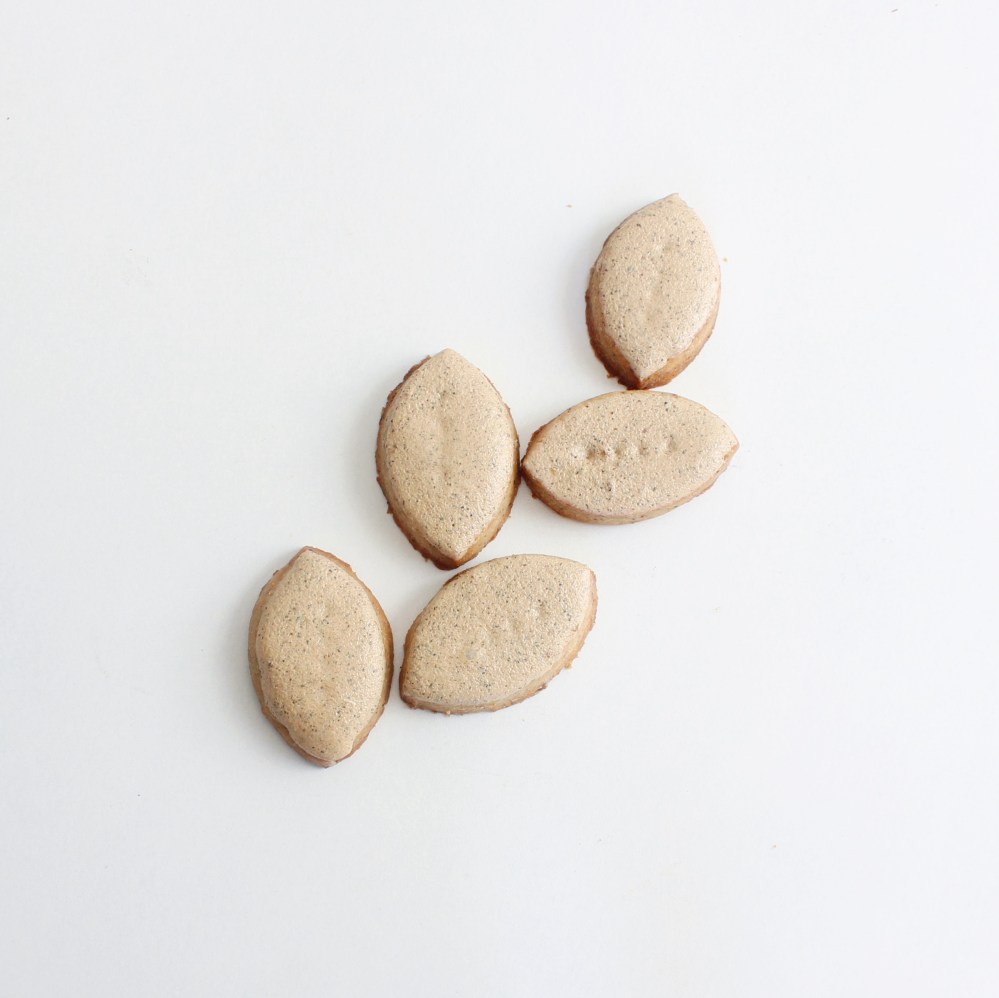
With the cookies, I went with the shape of the French confection, calissons! Calissons are these ovular shaped pieces of almond paste that are finished with a thin layer of icing on top. I like how elegant and dainty the shape of those are, and wanted to replicate a similar aesthetic for my cookies! The cookies are made from a shortbread dough that uses the hojicha miso sugar, while the icing is a royal icing made with the same sugar. Things to note include the sugar itself – it is important to roast the miso paste in the oven until it can be cleanly peeled off of the baking sheet. If the miso is wet, then it will cause the miso-hojicha sugar to turn into a muddy mixture instead of a fine powder. The shortbread dough itself can be made easily by hand, and even easier by food processor. The icing is a royal icing, meaning it is made with whipped egg whites and sugar. This not only uses the leftover egg white when you use the egg yolk for the dough, but also creates a crunchier glaze on the finished cookie itself. Since raw egg whites can be salmonella-prone, I pasteurize the egg white on a double boiler with the sugar first to kill off those germs. The glaze itself does form a nice shell on the exterior of the cookie, but if you find that the glaze does not set up in 10 minutes after dipping the cookies into it, just bake the glazed cookies on 250 degrees F for 10 minutes, and that should set it up.
For the miso-hojicha sugar:
1oz white miso paste
3 tbsp loosely packed hojicha leaves
1 cup granulated sugar
Spread the miso paste onto a silpat and bake at 350 degrees F for 10 minutes. The miso should be blackened at the edges and be easy to remove from the mat. Transfer the miso into a spice grinder or blender with the other ingredients and blend until a fine powder is formed. Store the powder in an airtight container at room temperature.
For the shortbread dough:
1 cup all-purpose flour
2oz miso-hojicha sugar
1 stick unsalted butter
1 tsp vanilla extract
1 egg yolk
In a bowl, mix together the flour and sugar first. To that, add in the butter, mixing until a fine, crumbly dough forms. Mix that with the vanilla and egg yolk to form your cookie dough, and refrigerate for 10 minutes. Roll the dough out on a lightly floured surface and cut out oval shapes using a 3-inch ring cutter(think like the cross sections of a Venn diagram). Score the tops of the cookies with a fork and refrigerate the cookies for 10 minutes. Transfer the cookies to a lined sheet tray and bake at 375 degrees F for 12 minutes. Allow the cookies to fully cool before attempting to glaze.
For the royal icing:
1 egg white
6oz miso-hojicha sugar, in three parts
1/4 tsp cream of tartar
Whisk the egg white and one part of the sugar together in a heatproof bowl over a double boiler until the sugar is fully dissolved into the egg white and the whites are frothy. That will pasteurize the actual egg white so that the icing will be fully sanitary to consume! Take the bowl off heat and whisk into that everything else, continuously mixing the egg white mixture until it doubles in volume and is pale brown in color. Carefully dip the cookies into the icing, letting them rest on an icing rack afterwards to let the excess drip off and the glaze set.
 Freddy's Harajuku