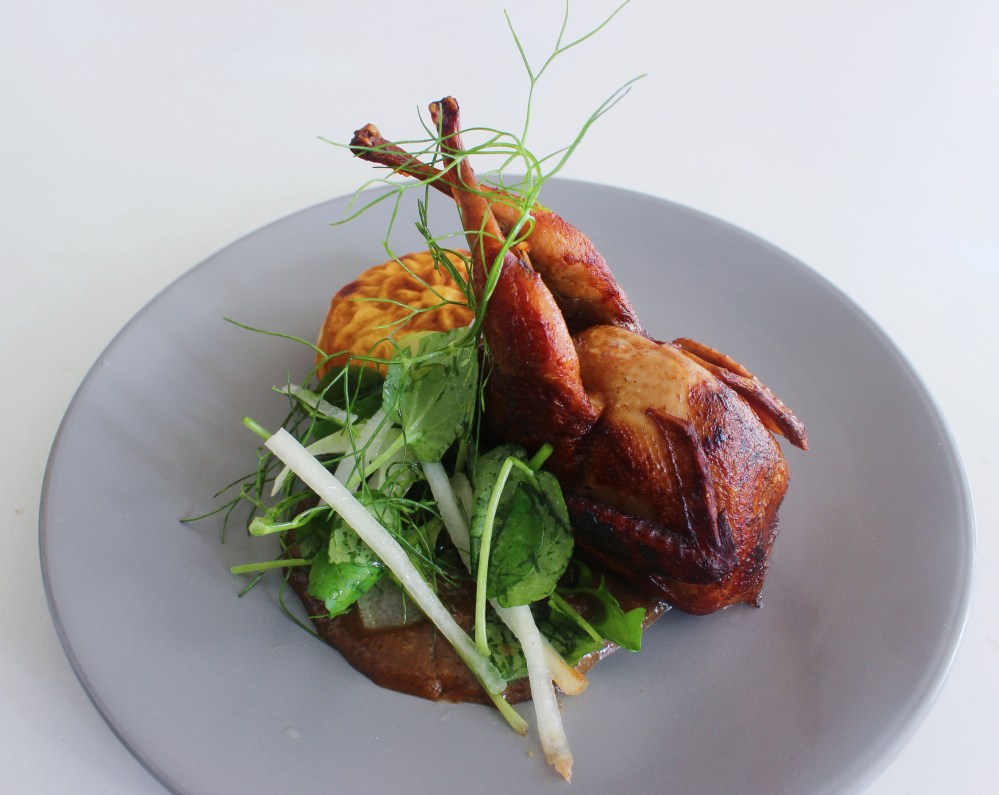
I’ve been trying on and off to make this recipe for years now, but until recently, I had zero clue to where to buy quail. That is until I finally came across a meat market that sold almost every conceivable protein imaginable, including quail, and I could finally revisit this concept! The idea was to have this tea-smoked quail, tiny and delicate, with a jus made from the bones, and a cute little savory pastry, similar to a Chinese mooncake meets a meat pie, offsetting that. I feel like that kind of format of dish could be used with a variety of proteins and served in a variety of ways, and I love versatile dishes like that where a different protein or ingredient can be subbed in depending on seasonality and availability. It is a restaurant-y way to approach a dish, since the operation of making the dish will not change too much, but you are still introducing something new with each slight variation or change that is made to the featured ingredients! I specifically wanted to go with quail because since it is a delicate little game bird, and it would present well with the other components, and add some height to plate. For this dish, I wanted to feature a tea-smoked quail, a barley tea-quail jus, and a larded pastry-wrapped chestnut “mooncake”. The idea here was that the mooncake would be this savory chestnut pie, pressed into the shape of a mooncake for a gorgeous visual aesthetic, with a flaky, rich pastry. I also wanted to bring in some freshness, to contrast the rather hearty components, in the form of a salad. In this case, I went with fennel, daikon, and watercress, to bring brightness, freshness, and a little spice to brighten up the heartiness of the mooncake, the meatiness of the quail, and the richness of the sauce.
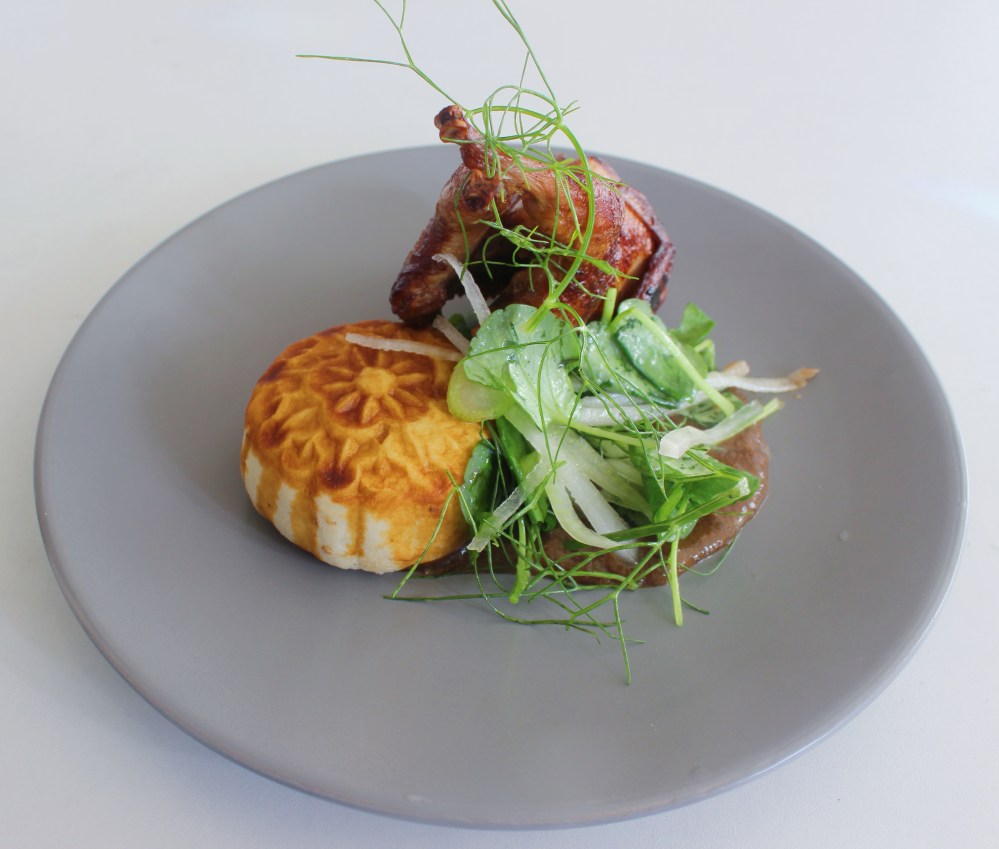
In terms of technical difficulty, there is quite a bit going on here. The quail needs to be butterflied(have the spines removed so that they can be spread flat), so that the spines can be used to make the sauce, the quails can be seared more evenly, and to reduce the cooking time on the birds themselves. While quail is a game bird, it is cooked more in line with chicken than duck, so they still need to be medium well to well done to ensure safe consumption. The quail itself is first marinated in koji to draw out more umami, then seared in lard, brushed with honey and soy(to ensure a nicer browning on the exterior), roasted in the oven, then finished in a tea smoke to give it a smoky, fragrant flavor. The tea smoker is one of my favorite techniques to employ in savory or sweet applications, and you will need a roasting rack, aluminum foil, and a pan or bowl large enough to act like a lid to set one up! For the mooncakes, the filling is a savory chestnut puree that needs to be chilled first, then the pastries will need to be formed, pressed, brushed with egg yolk, and baked. The sauce is a jus made from the quail spines and layered with a lot of other ingredients to give it more depth, while tying back to some of the other components(fennel to tie with the salad and and tea to tie with the smoke). The salad is probably the easiest salad to make, If you feel comfortable with it, use a mandolin to guarantee even thinness. Overall, I am super happy to have brought this dish to full fruition, and I can wait to play around with this concept with other fillings and proteins!
Make the 4 servings:
For the chestnut puree:
60g roasted and peeled chestnuts
1g miso paste
1g shio koji
5g veal demi glas
10g heavy cream
In a blender, puree everything together until smooth and creamy. Refrigerate the puree until it firms up and divide into 15g balls. Keep chilled for assembly.
For the mooncake dough:
70g flour
40g golden syrup
1/2 tsp lye water
15g lard
1 egg yolk
In a bowl, mix together everything minus the egg yolk to form your dough. For the mooncakes, take 30g of your dough and flatten it the best you can. Take a chilled 15g ball of the filling and wrap the dough around the filling. Generously oil mooncake paddles and press the mooncakes into the paddles to form their shapes. Remove and place onto a lined sheet tray. Brush with egg yolk and bake at 350 degrees F for 20 minutes to finish.
For the lye water, you can make it from scratch by boiling down 2 tbsp water with .1 grams of baking soda for 2 minutes. You don’t need a lot of lye water to make this recipe, but you can also purchase it at Asian supermarkets! You can also use lye water for things like pretzels!
For the golden syrup, you can make it by boiling down 3/4 cups of sugar with 1/2 cup water and a pinch of salt. Once the sugar is golden brown, take off heat and stir in 1 tsp lemon juice to finish. You can also sub out the syrup with honey!
For the tea-smoked quail:
4 quails
2 tbsp shio koji
2 tbsp lard
2 tbsp soy sauce
2 tbsp honey
4 bags barley tea
1/4 cup granulated sugar
Using either a knife or cooking shears, butterfly the quails, removing the spines and reserving them for the jus. Toss the quails with shio koji and allow them to marinade for at least 10 minutes. Heat up a cast iron pan with lard and sear the quails, skin side down, for 5 minutes. Place the quails onto a roasting rack. Brush the exterior of the quails with a mixture made from the soy sauce and honey. Transfer the quails to a 400 degree F oven and roast for another 10 minutes. Then brush the In a pan, line the interior with three layers of aluminum foil. Place into the pan the barley tea and sugar and begin heating up the sugar until it begins to burn and smoke up with the tea. Place on top of the pan a heatproof grate or rack and place on top of that the quails. Cover the quails with either another pot or bowl and allow the quails to cook in the smoke for 5 minutes on high heat.
For the tea and quail jus:
Reserved quail spines
4 tbsp brown butter
1 bag barley tea
8oz chicken stock
2 shallots, peeled and diced
20g diced fennel(can use scraps!)
3 cloves garlic
1g dried kombu
2 tbsp Mirin or shaoxing wine
1oz veal demi glas
1g mushroom soy sauce
In a pan, start by searing the quail spines in brown butter until the exterior of the bones are caramelized and golden brown on each side. In another pot, heat up the barley tea and chicken stock together, allowing the tea to steep into the stock for at least 5 minutes on medium-high heat. Once the spines are golden-brown, remove them from the pan and add to it the shallots, fennel, garlic, and kombu, sweating them out on medium-low heat. Once the shallots and garlic are translucent, add back the spines and deglaze the pan first with mirin or shaoxing cooking wine, then add to that the stock, straining out the tea bag – be sure to stir the bottom of the pan so that the liquid picks up all of the fond(brown bits on the pan from cooking the quail spines). Add to that the veal demi glas and reduce the sauce on low heat for at least 30 minutes to an hour. Strain out the solids in the sauce and add soy sauce to finish.
For garnish:
20g julienned fennel and fennel fronds
15g fresh watercress
10g julienned daikon radish
10g rice vinegar
5g honey
1g salt
Toss the ingredients together to form a quick salad.
To plate the dish, start with the sauce in a large circle, and then place down the mooncake, the quail, and the salad to finish.
 Freddy's Harajuku