This literally was a recipe that came about because I had about 8oz of ricotta cheese leftover and I was not 100% sure what to do with it. I made a poll on Instagram, giving a couple of the options I was leaning towards: the choices were: ravioli, cheesecake, doughnuts, or whatever Google told me to do. Honestly, I was floored that ravioli won. I was high-key expecting people to make me be an AI Girl in an AI World and put me at the mercy of Google, but I guess people want to see me cook savory food, so ravioli it is. In this case, I chose to define a ravioli as a stuffed pasta, and after doing a lot of brainstorming, I came up with the idea to make cappelletti. Cappelletti are similar to tortellini in that they are a stuffed pasta, but they are folded slightly differently to resemble a cap, which is the pasta’s Italian namesake! They also kind of look like fortune cookies and the curving-folding technique is very similar to how those are made. I wanted to use that curved shaped pasta soak up the gorgeous sauce that I am pairing it with: a walnut-miso dashi.
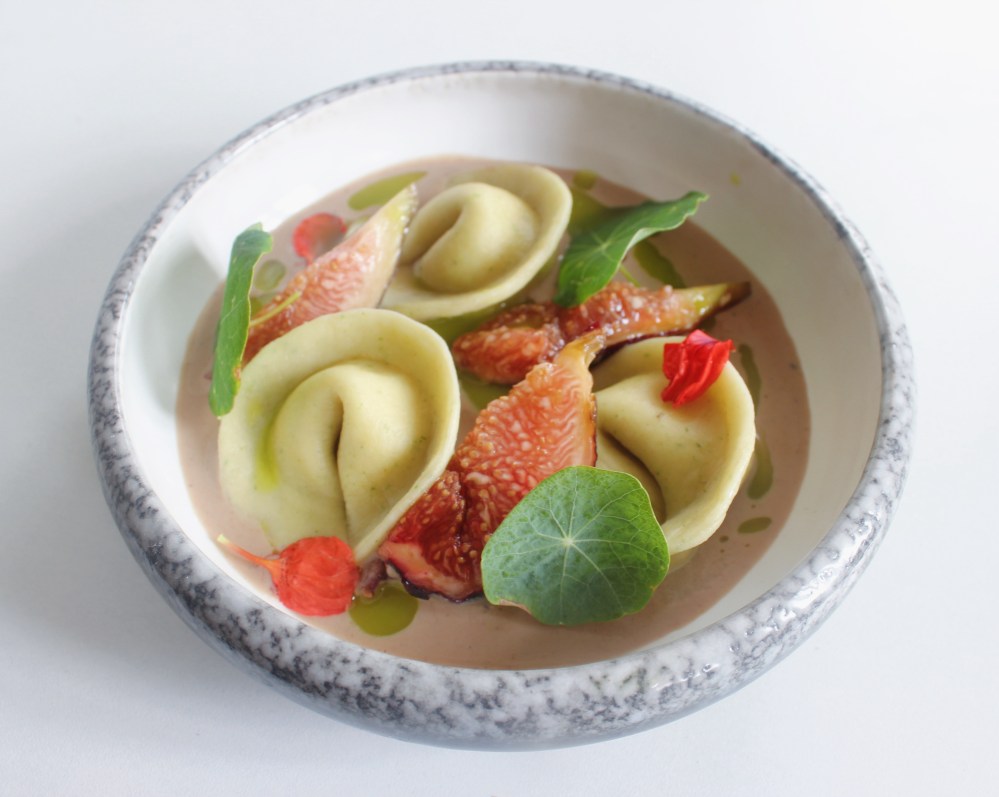
The walnut-miso dashi is kind of like a walnut milk-based beurre monte, which is a French butter sauce made by emulsifying butter with water. Except in this case, we are using brown butter instead of cold cubes of butter, and the walnut milk is made with kombu(dried kelp) dashi to add in extra layers of umami, and miso paste to season it and give a creamier texture and to offset that brown butter won’t provide that creamy of a texture to the sauce itself. The idea of this sauce was inspired by an Italian pesto called pesto di noce, or a walnut pesto. For context, “noce”, pronounced noh-cheh, means “nuts” in Italian, but is pronounced the same way as “noche”, which is Spanish for “night”. So when I first heard the name of this pesto when I was watching Masterchef UK a long, long time ago, I thought that the cook, I believe her name was Shivi, was making a night pesto. Again, this is a bit of a reach, but that was just how my head worked it out. Either way, the sauce itself is silky, light, yet toasty and comforting from the walnut, brown butter, and miso combination. I was really going for that sort of creamy textured sauce, but trying not to make it excessively heavy, especially since we are stuffing the pasta with the ricotta cheese that started this whole rabbit hole journey.
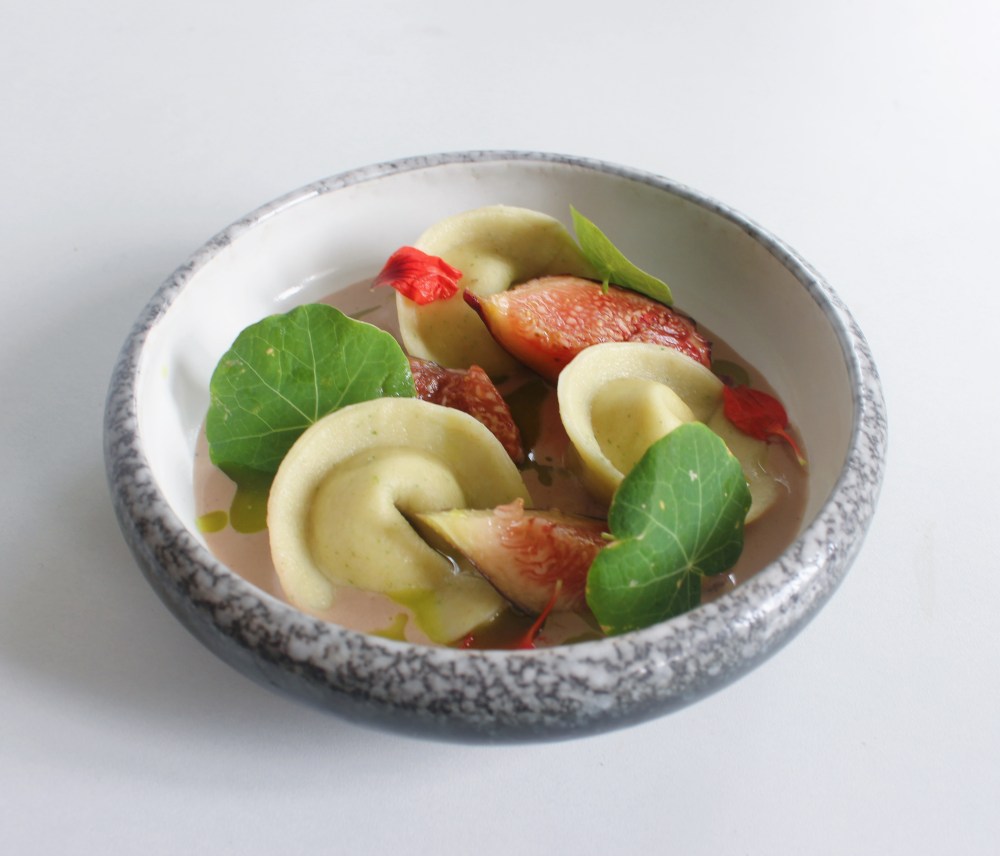
In terms of prep, the dashi takes time to make, so that should be your biggest priority. The kombu needs to steep in the water, and the roasted walnuts will need to soak in that same dashi liquid, just so that they will blend smoothly and the final sauce will not be grainy – I soaked them overnight, but 2 hours should be sufficient, going off of the rules of how to make cashew cheese. The filling can also be prepared in advanced, simply being ricotta with the whey squeezed out of it, mixed with miso, salt, and black pepper. The dough is a straightforward ravioli dough – I live and die on chef Odette Fada’s ravioli dough recipe, because it is so simple and quick to make. It was the same dough I used when I won the Alaskan King Crab Invention Test back in season 10, and that alone is a good reason why I still use that dough recipe to this day for stuffed pasta. For other garnishes, I wanted to introduce some green components to the dish, so I have a nasturtium infused herb oil and fresh nasturtium leaves and petals. Nasturtiums are these big, round, lily pad-like leaves that grow rampantly here in Southern California. They have a peppery flavor, and both the leaves and the flowers are edible, so I figured if they grow together, they can go together here in this recipe. Considering how inherently rich that ricotta filling is, and how creamy the sauce is, the nasturtiums adding that pepperiness will be a pleasant contrast, making for a balanced pasta-eating experience.
For the walnut-miso dashi:
2oz walnuts
2g dried kombu
1 cup water
4 tbsp unsalted butter
1 tbsp yellow miso paste
1/4 tsp xanthan gum
In a pan, toast the walnuts on medium heat for 5 minutes, stirring the nuts until they begin to char on the edges. With the kombu, toast it over an open flame for 10 seconds, flipping the kombu halfway through just to get both sides heated. Soak both the kombu and the walnuts in the water for at least 2 hours. Place the walnuts and their soaking liquid into a blender, removing the kombu. In a pan, heat up the unsalted butter until it begins to brown, then transfer that to the blender. Lastly, add in the miso and xanthan gum into the blender as well. Puree everything in the blender together into a smooth, creamy soup-like consistency. Transfer everything into a pot and whisk on medium-high heat for 5 minutes, just to reduce the liquid and intensify the flavor. The consistency should resemble a loose cream.
For the pasta filling:
4oz ricotta cheese; excess whey strained out prior to measuring the 4oz
1 tsp yellow miso paste
a pinch of salt
a pinch of black pepper
In a bowl, mix everything together until combined. Transfer to a piping bag.
For the pasta dough:
2/3 cups all-purpose flour
1 egg
a pinch of salt
Mix the ingredients together to form your dough. Allow the dough to rest for 5 minutes before rolling out to the thinnest setting on your pasta roller. Cut out and press 3-inch disks. Pipe roughly 1 tbsp of filling into the center of each disk, flat side facing up, and fold the disks in half, sealing the edges together, then fold the pointed ends together to form your cappelletti. Boil these in heavily salted water for 1-2 minutes right before plating them.
For the nasturtium oil:
1oz fresh nasturtiums
1oz extra virgin olive oil
a pinch of salt
Blanch your nasturtium leaves in boiling water for 5 seconds then shock them in ice water for another 10 seconds. Squeeze out any excess liquid and transfer the leaves to a blender or spice grinder. Puree with olive oil and salt. Pass the liquid through a cheese cloth to remove any solids, leaving a clarified green oil to garnish with.
For garnish:
Fresh nasturtium leaves
Fresh nasturtium flowers
To start, place down about 2oz of the dashi into the center of a shallow bowl or plate. Drip dots of the herb oil onto the circle. Place down 3 cappelletti around the circle and garnish the them with the nasturtium leaves and flower petals to finish.

 Freddy's Harajuku