Whenever I hear the term “sourdough starter”, I get immediate pandemic 2020 flashbacks to when everyone hogged up all the flour and made sourdough with it. I was one of the less lucky individuals who did not get ahold of any all-purpose flour during that time, I wound up learning how to bake gluten-free during that spring/summer, and only started attempting sourdough towards the end of the summer when flour became more readily available. So a lot of people probably have a few months more of sourdough making experience than I do because of that. That being said, I have been practicing making a sourdough starter recently again, and I wanted a place to compile my notes, findings, and just other tidbits to refer back to so that future Fred and anyone else who is interested in making their own starter can reference this. I did quite a bit of internet research as well, but I found that not all of my questions were answered, hence why I am writing my own notes down to include things that may not have been covered by other recipe blogs. So below are my notes(and eventually my ratios, which honestly aren’t too different from your standard starter) on my sourdough starter experiments.
What is sourdough starter?
Sourdough starter is a mixture of water and flour that is left to ferment, causing bacteria to form in the mixture. While that sounds gross and kind of unsanitary, bacteria is actually pretty normal in cooking(think kimchi, koji, and yeast for that matter, all bacteria that result from fermentation!). This starter should be treated like living creature or a pet that needs to be fed regularly and maintained often. This is so that the bacteria can continue to thrive and develop, giving the starter the ability to leaven bread and add that tangy, sour flavor that you come to expect with a piece of sourdough bread. So long as you feed the starter at least once a day and keep it in a moderately warm place, you will have a healthy starter that can be used in sourdough-based recipes!
Differences between sourdough starter and yeast
Both starter and yeast can be used to leaven your bread, a term that means allow your bread to rise and have those nice air pockets and soft texture as it rests and eventually bakes. Starter, being a mixture of bacteria, does actually contain smaller amounts of yeast, which is why you can substitute yeast with sourdough starter in bread making and still have that aeration and open crumb structure in your sourdough bread.
You can absolutely bake a loaf of bread using both starter and yeast, but keep in mind that it really does not change the airiness in a sourdough loaf to use both. I will say though that using yeast in a sourdough loaf will allow it to rise faster and it does work as a failsafe to guarantee that your bread rises if your starter is not mature enough to proof the dough on its own. A sourdough loaf that contains yeast is usually referred to as a hybrid loaf. Hybrid loaves are nice, but they might not have that characteristic tang you would expect from a sourdough loaf.
While sourdough starter contains yeast in it to allow that rise, it is a small amount compared to just adding yeast powder directly into a dough, so a sourdough starter-only loaf will take anywhere from 3-6 hours to properly proof before you can bake it. The main benefit to using starter is that is can be used in lieu of active dry yeast, and it adds that characteristic tang to sourdough bread that yeast will not be able to provide. If you are already going down the rabbit hole of making your own starter and taking care of it, you might as well try to go all-in with a starter-leavened loaf and see what happens.
Feeding your starter
As mentioned above, sourdough starter needs to be fed regularly, at least once a day, if not twice a day, so that the bacterias in it remain happy and continue to thrive. The typical way to feed your starter is to mix together as flour and water in equal parts, matching the weight of your current starter, and then dumping that into your starter. The bacteria will then start feeding on that mixture, and will bubble up. There are a couple things to factor in when it comes to feeding your starter.
One factor on feeding your starter is the kind of flour you feed it. I have heard that rye or spelt flour are really good to use instead of AP flour for your starter feed. I personally have never tried it because I could not find either and was too lazy to Amazon it, but I have found that whole wheat works well too.
Another hilarious way I have fed my starter was by pureeing failed sourdough bread loaf attempts with water, and then feeding that to my starter instead of mixing more flour and water. I have found ZERO articles online specifying that you can do this, but surprisingly, it worked. My starter was still thriving and bubbling after I fed it mushy, blended up wet sourdough bread, and this makes sense, since sourdough bread is made of flour too. I actually even put an immersion blender into my starter and pureed the bread directly into it. While I was concerned that this would kill my bacteria, the starter was still bubbling perfectly fine afterwards, so it might just be a temperature thing and I did not blend it long enough for the starter to heat up and kill off the cultures.
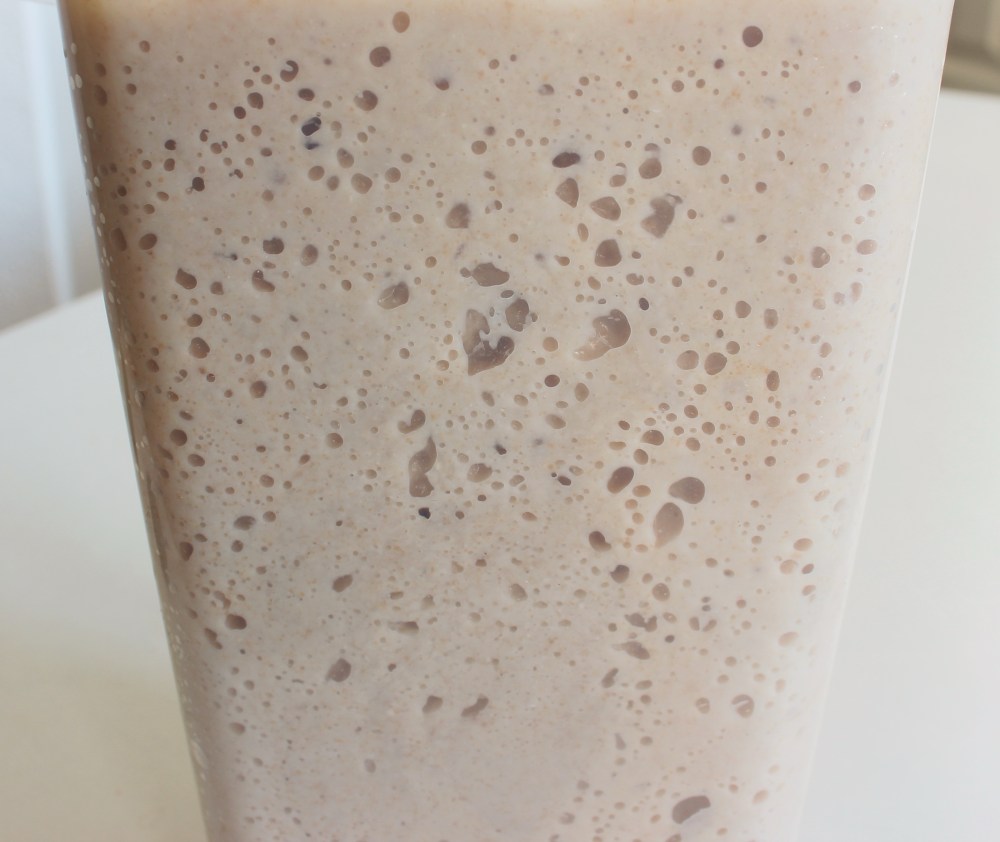
I found that my starter was a convenient trashcan for failed dough attempts as well as leftover doughs(I have fed my sourdough blended up pieces of phyllo dough and it actually ate it!), and even blended up chocolate cake(keep in mind that the starter will take on the colors of what you feed it, so that starter wound up with a noticeably chocolate-brown hue). I have heard from friends that they have fed starter apple sauce too, so that’s another option too.
The other factor when it comes to feeding your starter is mass. Every time you feed your starter, you are essentially doubling its weight. Usually, starter needs anywhere from 5 to 14 days of feeding before it is healthy enough to bake with. There comes to be a point where that is no longer feasible. And that is why sourdough discard is a thing.
What is sourdough discard?
In part of maintaining your starter so that it is manageable, you can discard half of your sourdough starter prior to feeding. By discard, we really mean pour half of it out, and then feed the half that you did not pour out. Depending on how healthy your starter is, this discard could just be used to bake bread already, but if this is a younger starter(like 3-5 days old), you can always use it in place of flour+water in other baked goods like muffins, biscuits, crackers, or even pasta dough if you add enough additional flour to it. Discard is an important part of the sourdough starter cycle, specifically maintaining the size of your starter, as without it, you will probably need to store your starter in a bathtub after 5 days.
Storing your starter
I usually keep my starter in a larger Tupperware container, but I have seen people use mason jars or even large mixing bowls too. So long as it is big enough to contain your starter and so long as it can be covered, you are good. If you do not plan to feed your starter every day, storing the starter in the refrigerator is a good way to slow down the feeding cycle; I only recommend refrigerating your starter after it is healthy enough to bake bread with, otherwise you are just prolonging the needed feeding time to get your starter sourdough loaf-ready.
I have also seen ways to store your starter if you want to essentially put it to rest without permanently killing it – freezing it is one way to store the starter, but thawing can cause mixed results in terms of how damaged the bacterias are(my late-2020 starter Bertha actually died this way because I tried to store her in the freezer for about a year).
Another method to preserve your starter is mixing the starter with a ton of flour to make it a coarse, dry powder, then storing that in a dry, cold place – this is basically the equivalent of dehydrating it and you can revive that starter by just adding water.
Is my starter still alive?
This is a concern I had for the longest time. The TLDR answer to that is so long as there are bubbles in your starter, you are fine.
I have seen instances where my starter develops this weird clear liquid on top of it that may smell like vodka or hand sanitizer. This alcoholic liquid is called hooch, and it is normal on your sourdough starter. This just means that your starter is hungry for more flour, so just add flour in to feed it, and you are good to go.
I have also experienced instances where my starter develops these black spots on top. The black spots are the bacteria in the sourdough dying from starvation. Worry not, that just is another indicator that your starter is hungry, and that you need to feed it. Just feed the starter and the black spots will eventually go away.
Now if your starter starts to form red spots and is no longer bubbling, then that is a truly dead starter, and unfortunately you will have to start over.
How do I know my starter is ready to bake sourdough?
The million dollar question. While most recipes say that starter is ready to bake with after 5 days of feeding, I call bullshit because I did feed mine for 5 days and my loaves were dense and not proofed. I ended up having to feed my starter an additional 3 days before it was ready.
The main thing to consider is the size of the bubbles in your starter. Tiny bubbles will translate to little aeration in your dough, so then you wound up with a dense, tight crumb that kind of resembles cake. Which you absolutely do not want in your sourdough.
The bigger the air bubbles in your starter, the more bacteria there are, and that translates to more bacteria that will work on proofing your dough to the loose, airy crumb that you want in sourdough.
Starter ratios:
1/2 cup all-purpose flour
1/2 cup water
Literally just mix this and let it sit overnight, covered, for 1 day.
Starter feed:
1 part all-purpose or whole wheat flour
1 parter water
If your starter begins to get too large, discard half of it(I usually only start discarding from day 3 or 4 onwards). Weight out these ingredients so that the two combined match the weight of your starter(after discarding is done). Mix this together and dump it into your starter. Repeat this process every day.
 Freddy's Harajuku
6 Comments Add yours