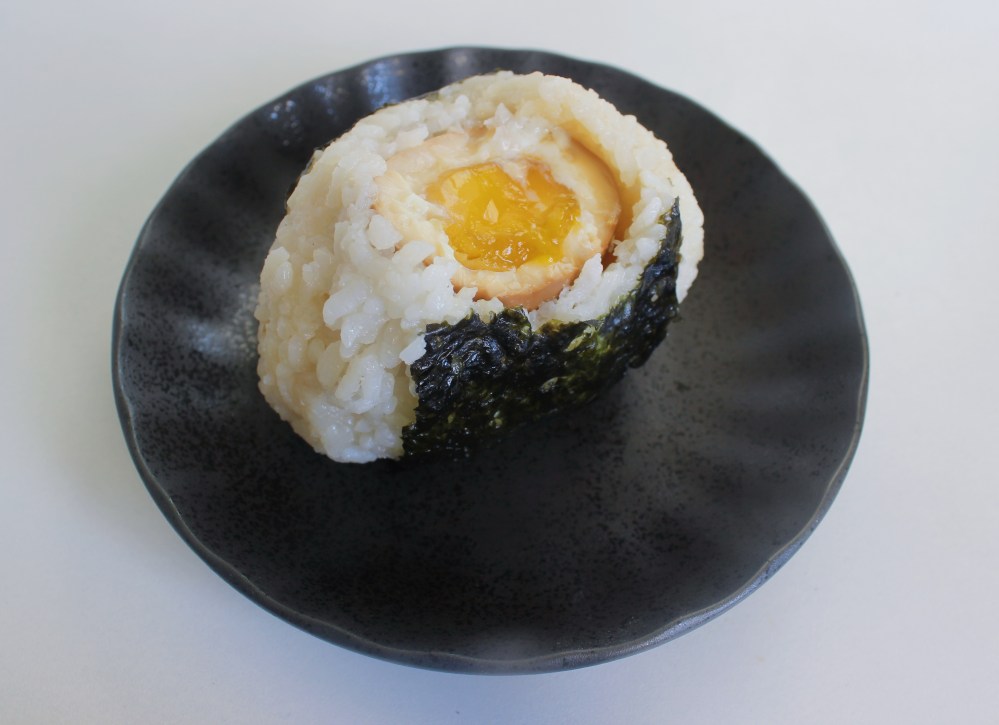
This recipe is inspired by an onigiri I saw when I was traveling in Japan earlier this February. We were staying in Shinjuku, and had about 4 days(including travel) to explore Tokyo. While we were at Tokyo Skytree, there was an onigiri store in the department store, and I saw this onigiri that was triangular in shape with an ajitama(flavor egg or a soy dashi-marinated egg) poking out from the rice, with the rest of it wrapped in seaweed. Now I have seen some seriously cute onigiri in my day, but this one resonated with me. I love eggs, rice, and seaweed already. That to me is a perfect trifecta of ingredients. So to see that in onigiri form was not only inspiring, but something that I, since that month, had on my to-make list. The rice was fluffy and lightly salted around the edges, the seaweed was crispy and light, and the egg almost burst when it was bitten into, with the exterior of the egg adding hints of umami and smokiness and the creamy, jammy yolky center coating the rice, acting almost like a sauce. It was highly addictive to eat. So it was only a matter of time(granted I wish I made these sooner now that I have) that a recipe for these would be in the works. Fluffy, buttery short-grain rice, a flavorful soft-boiled egg, and crispy nori. It honestly has become my favorite egg dish to make.
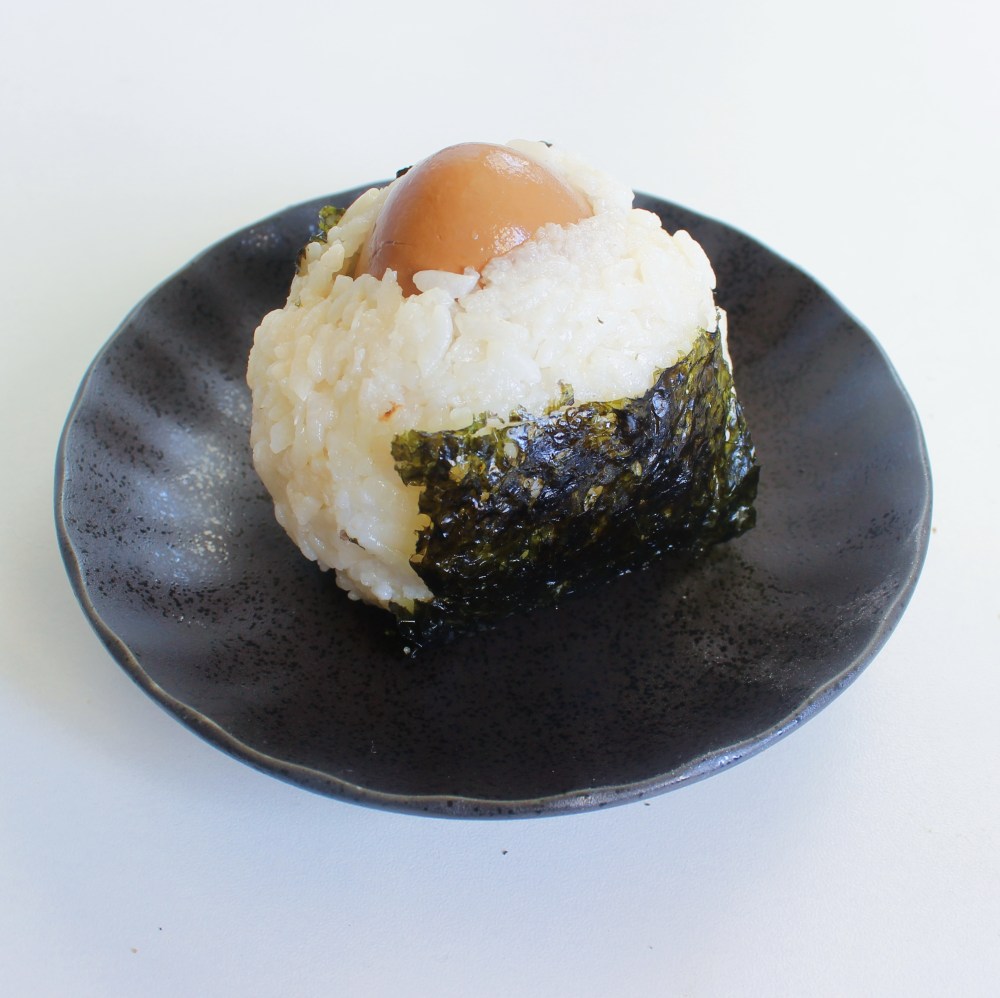
This recipe really comes down to two components – the rice and the ajitama. Now if you have a ricer cooker on-hand, then it comes down to just the ajitama. I did specify what to do if you do not own a rice cooker – trust me, I can relate. Back when I was in college, I did not fork over money for a rice cooker, so I had to learn how to cook rice in a pot on the stove. I did not love doing it that way, but for those of you who want to make rice but do not own a rice cooker, that method is for all of you. With the ajitama itself, it requires you to have relatively precise timing down. 30 seconds too long and you have a hardboiled egg. 30 seconds too early, and you might have a soft boiled egg, if you are lucky enough to be able to peel it. What I found, at least for my current gas-powered stove, is that 50 seconds in boiling water, then 6 minutes in simmering water gets these gorgeously jammy-centered eggs that peel relatively easily. So my recommendation is use a timer and be gentle with the eggs when lowering them into the water. Using cold water to shock the eggs will help them peel easier as well. And make sure to let them sit in the marinade for at least an hour if you want an ajitama with that characteristic tan-brown color. All in all, these were a fun recipe to make ahead of time, since you can pre-cook the eggs and marinate them in advanced, which gives you plenty of time to just cook rice and assemble them!
Makes 4 onigiri:
For the ajitama:
4 eggs, unpeeled
2 tbsp soy sauce
2 tbsp rice wine vinegar
1 tsp instant dashi powder
water*
In a pot filled with boiling water, gently lower the eggs into the water and place on the pot lid. Boil on high heat with the lid on for 50 seconds. Then reduce the heat to the lowest setting, and gently simmer for another 6 minutes, still with the lid on. Take the eggs out of the water and submerge them in cold water for 10 seconds. Gently tap the flatter end of the eggs against a flat surface to crack that part of the shell, and then re-submerge the eggs in the cold water for another minute. Afterwards, gently peel the egg shells off the eggs.
In a bowl, mix the soy sauce, rice wine vinegar, and mirin together. Pour the liquid into a clean tupperware and add to that your eggs. Add in just enough water to allow the eggs to be fully submerged in the liquid. Store the eggs in the refrigerator and allow the eggs to marinate for at least 1 hour before using.
For the rice:
1 cup white rice
1 1/2 cups water, plus more for washing
1 tsp canola oil
a pinch of salt
In a strainer, rinse the rice under running water until the water runs clear. Transfer the rice to a rice cooker with the measured water, canola oil, and salt. Stir everything together first, then and steam according to your rice cooker’s instructions.
Alternatively, place the rice, water, and salt in a pot and cover. Cook on medium-low heat for roughly 15 minutes, then gently remove the rice from the pot using a rice paddle or rubber spatula, allowing it to cool slightly at room temperature before attempting to use.
For assembly:
Nori strips
To assemble, start by taking 1/4 of the cooked rice and wrapping it around the egg, keeping the tip of the egg exposed from the rice itself. Form the rest of the rice around it into a triangular shape, and then when it is time to serve, wrap it a nori strip.
 Freddy's Harajuku